East Azerbaijan advances its heritage on the global stage
Rab-e Rashidi Placed on UNESCO’s Tentative World Heritage List
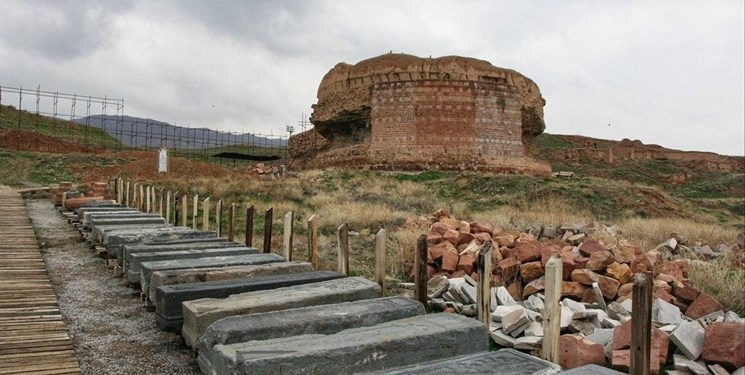
- Rab-e Rashidi placed on UNESCO’s Tentative World Heritage List
- East Azerbaijan’s cultural candidates include seven historic mosques
- Comprehensive dossier for the Arasbaran forests submitted for world heritage nomination
- Re-examination of the architectural and cultural capacities of the Tabriz Bazaar
- The world’s first university city on the path to scientific revitalisation
According to SAMA, Ahmad Hamzeh-Zadeh, Director General of Cultural Heritage, Tourism and Handicrafts of East Azerbaijan Province, announced on Sunday 23 August 2026 that the dossier for the Rab-e Rashidi complex has been placed on UNESCO’s Tentative World Heritage List. He added that the nomination file for this historic complex has been prepared and that the clearance of its core zone and buffer zone has been placed on the agenda, in order to create the necessary conditions for advancing the world heritage inscription process.
Cultural and natural candidates from the province
The Director General of Cultural Heritage of East Azerbaijan, referring to the serial nomination of Iran’s historic mosques, said that the province has put forward seven mosques as candidates for world heritage inscription. Among these properties are the Mehrabad Mosque of Bonab with its distinctive timber architecture, the Sheikh Shahab al-Din Ahari Mosque, the historic Tork-e Miyaneh Mosque, the Jameh Mosque of Marand and the Jameh Mosque of Tasuj.
Hamzeh-Zadeh also identified the Arasbaran forests as one of the province’s most important natural nominations for world heritage listing. He explained that the initial Arasbaran dossier had shortcomings due to human interventions, after which the dossier for the Dizmar forests was prepared. Ultimately, given the natural richness of the region, a proposal was put forward to combine the capacities of Dizmar and Arasbaran and to present a comprehensive dossier for the Arasbaran forests.
He stated that this dossier possesses considerable richness in the view of UNESCO evaluators and the judging panel, and that the review of the preliminary assessments for the world heritage inscription of Arasbaran will take place in two weeks.
Re-examining the capacities of the Tabriz Bazaar
The Director General of Cultural Heritage of East Azerbaijan pointed to the province’s standing on the World Heritage List and said that the diversity of world-registered properties in East Azerbaijan is exceptional. These properties include the Tabriz Historic Bazaar Complex, the ensemble of churches in the province, the Aras Geopark and three caravanserais inscribed as part of the serial nomination of Iran’s caravanserais.
Hamzeh-Zadeh stressed that East Azerbaijan’s world heritage journey began with the Tabriz Bazaar but is not limited to a single dossier; today, a collection of the province’s historical, cultural and natural assets is on the path to global recognition, and safeguarding this heritage along with the scientific and methodical preparation of nomination files is the most important prerequisite for continuing this journey.
He described the Tabriz Bazaar complex as far more than a UNESCO-inscribed property and emphasised the need to re-examine its historical, architectural and cultural capacities. The Director General of Cultural Heritage added that the Tabriz Historic Bazaar, as the largest interconnected brick-vaulted covered bazaar in the world, is one of the most outstanding manifestations of Iran’s historical and cultural heritage on the global stage, and its world heritage inscription has redoubled our responsibility to protect, present and re-evaluate this complex.
The official went on to say that the Tabriz Historic Bazaar covers approximately 30 hectares of core zone and 9 hectares of buffer zone and encompasses a vast collection of historic buildings. Dozens of historic monuments are located within the bazaar’s boundaries, including 29 mosques, with the Kabud Mosque – one of Tabriz’s most iconic historic buildings – forming part of this valuable ensemble.
Hamzeh-Zadeh, emphasising that the Tabriz Bazaar should not be regarded merely as a historic commercial complex, added that a significant part of the bazaar’s global value lies in the interconnection between its buildings, architectural spaces, mosques, sarās (courtyard caravanserais), timchehs (domed halls) and historic elements, and that these capacities must receive greater attention in the fields of research, presentation and tourism.
He also noted the inscription of the rock-cut village of Kandovan by the World Tourism Organization and added that these capacities demonstrate that East Azerbaijan possesses valuable global capabilities across various fields of cultural heritage, nature and tourism.
Rab-e Rashidi: the world’s first university city
The historic Rab-e Rashidi complex, located in the north-east of Tabriz, is one of the most outstanding legacies of Iranian civilisation from the Ilkhanid period. Founded in the 8th century AH (14th century CE) by Khajeh Rashid al-Din Fazlollah Hamadani, the learned vizier of the Ilkhanid rulers, this complex was in fact a large scientific and cultural township that operated with an orderly structure comprising schools, libraries, research centres, workshops and service facilities.
Historical sources recount the presence of thousands of students and scholars from various lands within this complex, a fact that makes Rab-e Rashidi one of the earliest examples of a university and international institution in the world. Today, the revitalisation of this complex holds particular importance not only from a cultural heritage perspective, but also in terms of historical identity, tourism development and urban regeneration.
The historic Rab-e Rashidi complex, which was inscribed on Iran’s National Heritage List in 1975 and whose endowment deed was inscribed on the UNESCO Memory of the World Register in 2007, now stands on the threshold of a new phase of attention and planning. The implementation of zone clearance programmes, the conduct of archaeological excavations and the fulfilment of world heritage inscription requirements can pave the way for the revitalisation of one of Iran’s most important scientific and cultural heritage sites – a heritage that once symbolised the flourishing of knowledge in the Islamic world.
The nomination dossier for this complex was submitted to UNESCO in 2025 and, following the necessary advocacy, has entered the procedural path towards world heritage inscription. This development can further strengthen Tabriz’s position internationally as one of Iran’s centres of civilisation and science.