‘The Map Has Changed’ programme to feature industry practitioners
SAMA Studio Brings Eight Strategic Themes to the Tehran Building Exhibition
- SAMA Studio and the Tehran Association of Mass Builders to hold the specialist programme ‘The Map Has Changed’.
- Eight strategic themes to be examined, including innovative financing, industrialisation and development-oriented architecture.
- Emphasis on the transition from a ‘build for sale’ logic to ‘build for living’ in the new market.
- Updating construction rules, professional responsibility and risk management under inflationary conditions.
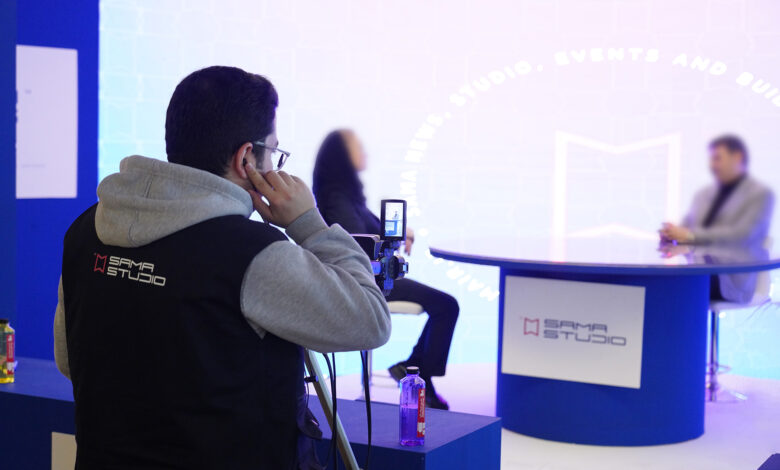
As the 26th Tehran International Building Exhibition gets underway, SAMA Studio, in partnership with the Tehran Association of Mass Builders, will host a series of discussions under the title ‘The Map Has Changed’. Structured around eight core themes, the programme will examine everything from construction methods in the new market environment and modern financing techniques to industrialisation, the supply chain, architecture, development and a review of construction regulations.
According to SAMA, Iran’s construction market finds itself in a situation where many of the industry’s traditional equations can no longer be repeated in the same way. Economic shifts, a market downturn, rising construction costs, energy constraints, difficulties in financing projects, changes in buyer behaviour and evolving expectations around building quality have all presented builders and industry practitioners with a fresh set of questions.
Against this backdrop, SAMA Studio, in collaboration with the Tehran Association of Mass Builders, is holding its specialist discussion series entitled ‘The Map Has Changed’ concurrently with the 26th Tehran International Building Exhibition. The programme will run from 18 to 21 August 2026 in Hall 38 of the Tehran International Permanent Fairground, welcoming builders, developers, architects, manufacturers, experts and construction industry professionals.
The aim of these discussions is not simply to review the construction industry’s existing problems, but rather to pose questions that can help redefine the path of construction under the new market conditions.
How should we build in this market?
The first theme of the discussions is dedicated to one of the most fundamental questions facing the market today: under current conditions, how should a construction project be defined? In a market where purchasing power, sales velocity, construction costs and investment conditions have all changed, projects can no longer be defined solely on the basis of past experience. Product type, target audience, project scale, construction timeline, sales strategy and the project’s economic model have become more interdependent than ever before. This segment will seek to examine the basis on which a builder should make decisions in the new market and what factors can reduce a project’s risk.
Construction in an age of uncertainty: recession, energy and inflation
Persistent inflation, a transactional recession, fluctuating production costs and energy-related constraints have made the decision-making environment for construction industry players more complex. Uncertainty is no longer a temporary occurrence; it has become one of the main components of project planning. This theme will address topics such as risk management, decision-making methods in a volatile environment, the impact of energy imbalances on materials production and project execution, and the necessity of designing more flexible models for construction.
Next-generation project financing methods
Financing remains one of the most critical issues in the development of construction projects, but the central question is whether traditional financing models are fit for the new market conditions. Sole reliance on a builder’s initial capital or bank facilities no longer meets the capital requirements of many projects. Partnership models, capital market instruments, investment funds, professional pre-sales and other modern capital-raising methods are among the topics that will be explored in this section. In the new market, the financing model must be considered from the very outset of project definition and become part of the project’s economic design.
Materials and the building supply chain
Building materials are also no longer merely a technical matter or a product purchase. Raw material prices, energy, transportation, product availability, production stability, quality, service and the ability to secure supply throughout project execution all affect the final cost and quality of a building. This theme will examine the relationship between manufacturers, builders, architects and developers, as well as the role of the supply chain in increasing project efficiency. One of the main questions in this section is how manufacturers can move beyond being simply a ‘product seller’ and become part of the value-creation chain in construction projects.
Architecture, development and the future of urban living
The definition of a construction project is also changing. In the past, a significant part of a project’s value was measured by its floor area, location and price, but today factors such as quality of life, architectural identity, public space, spatial flexibility, the living experience and the needs of a new generation are also influencing the decisions of buyers and investors. These discussions will explore the relationship between architecture and development, and the role of design in the economic and social value creation of a project. The central question is whether architecture should adapt itself to the market, or whether the market should change its view of architecture.
Reviewing construction rules and professional responsibility
Another core theme of ‘The Map Has Changed’ programme is an examination of the rules governing construction and the professional responsibility of the industry’s actors. In the process of constructing a building, the builder, executor, designer, supervisor, municipality, Engineering Council and other relevant bodies each bear a portion of the responsibility. Yet one of the serious issues in the construction industry is the lack of clarity around the boundaries of responsibility and accountability in certain parts of this chain. Topics such as the qualified executor, the building’s technical identity document, quality insurance, supervision, accountability and the role of professional bodies will be among the subjects discussed under this theme.
Building for sale or building for living?
One of the important questions in the housing market is the ultimate purpose for which the construction product is created. For years, a significant portion of projects have been shaped by the logic of ‘build, sell and exit the project’; however, changing lifestyles and buyer expectations could challenge this model. Space quality, shared amenities, building management, energy efficiency, flexibility and the living experience are becoming part of a project’s real value. This theme will examine whether the time has come to redefine the construction product and shift from ‘building for sale’ towards ‘building for living’.
Construction industrialisation: choice or necessity?
The eighth theme of ‘The Map Has Changed’ discussions is dedicated to construction industrialisation. Reducing dependence on manual labour, increasing execution speed, quality control, reducing material waste, standardisation and better cost management are among the most important reasons that have once again placed industrialisation at the centre of the construction industry’s attention. However, industrialisation is not limited to the use of prefabricated systems; it requires changes in design, procurement, execution, project management and even the business models of builders. This discussion will seek to answer the question of where genuine industrialisation in Iran’s construction industry should begin and under what conditions it can be economically viable and scalable.
SAMA Studio: a conversation about the new construction map
‘The Map Has Changed’ discussion series is an effort to create a different kind of space at the heart of the building exhibition – a space where, instead of repeating well-known problems, the industry’s new questions are raised. Over these four days, builders, developers, architects, manufacturers and other construction industry professionals will present their perspectives on the programme’s eight core themes. ‘The Map Has Changed’ will take place from 18 to 21 August 2026, concurrent with the 26th International Building Exhibition, in Hall 38 of the Tehran International Permanent Fairground.