Brand is a multi-stakeholder asset
A Building Brand Creates Value When Promise, Design, Construction and Customer Experience Align

- A project brand must create credibility for multiple stakeholders, including investors, banks, and suppliers
- A strong brand provides liquidity and credibility for the asset holder
- The brand promise must be fulfilled in design, construction, and customer experience
- The resident's real experience after delivery shapes the final judgment of the brand
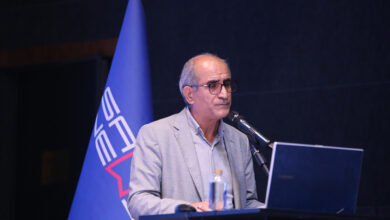
According to SAMA, Davoud Bidar, a brand specialist for construction industry developers, emphasized in his presentation at the 24th National Conference and Exhibition of Builders, Developers and Designers of the Country that a project brand is not built solely for the end buyer; it must simultaneously create credibility for the investor, the supplier, and other stakeholders. In his view, brand strength emerges when the advertising promise, design, construction quality, and the actual user experience are all aligned.
Brand has meaning for multiple stakeholders
Bidar urged developers to move their view of branding beyond “advertising to sell units.” He said a construction project does not have just one target audience; the brand must be meaningful for several key stakeholders—from the end consumer and investor to banks, financial partners, and the entities that remain connected to the project throughout its lifecycle.
He gave an example: if an investor has purchased a portion of a project’s units, the ability to resell those units also depends on the strength of the project’s brand. If the developer uses the brand only until the initial sale and then abandons the secondary market, the investor will have less confidence in the next project. From Bidar’s perspective, a strong brand should also provide liquidity and credibility for the asset holder.
He applied the same logic to financing, noting that banks and financial institutions also consider the track record and credibility of the builder in their decisions. Therefore, the brand is not just a marketing tool; it is an asset that can play a role in financial negotiations, capital attraction, and the formation of future collaborations.
Four stages of brand building
Bidar then explained the brand-building process in several stages. The first stage is the “brand promise”—what the developer announces to the market through advertising and communications: higher quality, after-delivery services, hotel-style amenities, distinctive design, or any other advantage. According to him, the problem begins when this promise remains only in the advertisement.
The second stage is translating the promise into product design. Bidar said if the developer promises hotel-style services, the capacity for that must be built into the architecture, common areas, accessibility, service spaces, and operational mechanisms. The product cannot be designed differently from what the brand has promised.
The third stage is construction with the same promised quality. He stressed that the brand suffers when a project makes a promise at the design stage but then deviates from that promise in material procurement, execution, and details to cut costs.
The fourth stage is the real customer experience after delivery. Bidar said the final judgment of a brand does not happen in a brochure or on social media, but when a resident lives in the building for several seasons and experiences the performance of cooling, heating, services, common areas, and execution quality. If this experience matches the initial promise, the brand is strengthened; if there is a large gap, advertising investment cannot compensate for it.
He cited projects like Ekbatan as an example of a name enduring in the public’s mind, and said the smaller the gap between “promise, design, construction, and experience,” the greater the likelihood that the project’s and developer’s name will turn into brand equity over time.
In the available implementation file, the beginning of Davoud Bidar’s speech cannot be fully separated; therefore, this text is limited to the parts that can be confidently attributed to his presentation, and speculative additions have been avoided.