Quality Is Not Accidental
Hanachi: Respect for Citizens Must Be Demonstrated in Practice by Managers
- Development of high-quality public spaces was one of Hanachi's main programs at Tehran Municipality
- Valiasr Street, with 18,000 plane trees over 60 to 70 years old, has the potential to become a pedestrian and recreational route
- Hanachi: Quality is not accidental and must become a characteristic
- Managers must demonstrate respect for citizens in practice, not only in words
- Public participation is the greatest possible work in changing the fate of the city
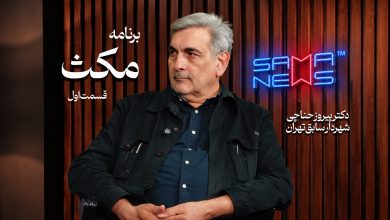
Pirouz Hanachi, a professor at the University of Tehran and former deputy minister of roads and urban development for architecture and urban planning, in an interview referring to his management experience at Tehran Municipality, described the development of high-quality public spaces as one of his main programs and said that part of these programs was implemented, including at Hassanabad Square and some metro stations, including Fatemi Station.
Referring to the plan to transform Valiasr Street into a pedestrian and recreational route, he described this street as one of the oldest streets in Tehran, with a capacity of about 20 kilometers and 18,000 plane trees over 60 to 70 years old on both sides, and announced that part of this plan has been implemented.
What a High-Quality Public Space Means
Hanachi defined his meaning of public space development as spaces where all people can benefit equally and under equal conditions, and in this context he referred to places such as Tabiat Bridge, Ab-o-Atash Park, and Abbasabad Hills; spaces that, according to him, a Tehrani citizen can access from distant parts of the city with one metro line and spend some of their leisure time there.
Referring to the project implemented above Khorasan Square, he said: “I was present on the opening day of this project, and if part of its facade had been left abandoned, you would have thought you were walking in one of the developed cities.” According to him, this area had previously become a workshop full of dust, and with an aesthetic and design-oriented approach, it was transformed into a high-quality public space, and people welcomed it immediately after the opening.
Experience, the Way to Correct Projects
This professor at the University of Tehran emphasized that this does not mean all these projects are flawless, but all of these are experiences, and every experience can be used to control and avoid repeating weaknesses and to strengthen strengths. According to him, advanced cities in the world do the same, and if a project has flaws, they do not abandon the entire project but strengthen its positive parts.
Changing the View of the City; Three Changes and Three Constants
In response to a question about three things that should change in the city and three things that should not change, Hanachi said: “My view of the city must change.” Citing a metaphorical sentence from a television advertisement, he emphasized: “Quality is not accidental,” and if we want a quality city and a good city, we must seek quality, turn it into a characteristic, and be sensitive to our living environment.
According to him, we should not do everything indifferently and in any way, and if a space near our home is being destroyed, we should be sensitive to it. This professor at the University of Tehran also emphasized that managers must spend time for citizens and pay attention to their demands, and to achieve this goal, managers must be chosen who demonstrate respect for citizens in practice and not only in words and who pursue citizen satisfaction. He added: “Citizens, too, should not settle for less, and if we want a quality city and neighborhoods, we must entrust the work to those who are qualified.”
What the Municipality Teaches Managers
In response to a question about the difference between the teachings of the municipality and the university, Hanachi said: “Academic teachings are recommendations that guide a person, but what is experienced in practice may not be mentioned in these teachings in detail.” According to him, in academic education it is said that any action in the city must be with public participation, but it is not taught what techniques can bring about people’s participation and how to win people’s hearts, and these matters are gained through experience.
He emphasized that managers, even if they are very specialized, cannot achieve the desired result without people’s accompaniment. This professor at the University of Tehran, referring to his experience in gathering managers around the idea that “the fate of the city can be changed with color,” said: “This is a theory that is also taught at the university, and many slum dwellers and marginal and informal spaces whose difference has not been institutionalized have used this technique to create attractiveness.” According to him, in South America, for example in Rio, an area full of PTBs and problems was revived with beautiful color to such an extent that it itself became one of the attractions.
Public Participation; The Greatest Possible Work
Hanachi considered public participation the greatest possible work and said: “When a forgotten area or a ‘black hole’ is given attention and people come to see it, the fate of that city can change.” Referring to his experience in an area that he said was probably District 16 or 19 and in the Bagh-e Azari area, he said: “In an alley where the district mayor, with color and people’s participation, had painted an axis at a very low cost and had even sought people’s help in choosing the color, during a visit, an elderly mother, even though on the first day she was angry with him and wanted to lash out, thanked him.”
According to this professor at the University of Tehran, that mother explained that her daughter was of marriageable age and she had not been able to bring a suitor to that area, but the work that was done gave character to their neighborhood and alley. He emphasized: “We had not spent much money, and with artistic taste and cheerful colors and very low-cost measures, we had taken a step that created great satisfaction.”
In conclusion, Hanachi emphasized that if someone has a comprehensive view, these points and people’s issues that no one pays attention to exist everywhere, and said: “Part of this view exists in academic teachings, and at the university, aesthetics and how to bring it to the city are taught, but how to communicate with people has no clear technique, and experience may be gained according to the number of cases that exist.”