Cities are a reflection of our aspirations
Urban Quality Is the Result of Purposeful Planning, Not Coincidence
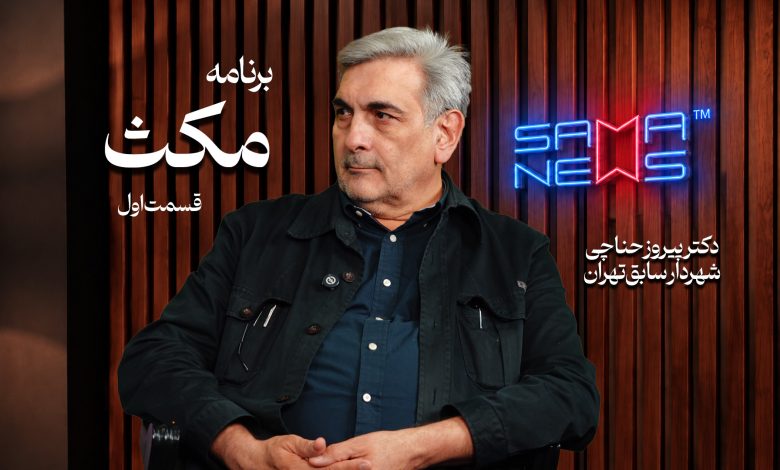
- Hanachi: Urban quality results from purposeful planning, budget, and engaging artists
- Successful world cities use art and storytelling to foster a sense of belonging among citizens
- 60 percent of quality in historic cities is linked to visual refinement and urban landscape management
- Experiences of Isfahan's Chaharbagh and Venice show the impact of proper design on citizens' tranquility
Pirouz Hanachi, a university professor and former mayor of Tehran, emphasizes that our cities are a reflection of our aspirations. He believes that quality in the urban environment is not achieved by chance; it requires a human-centered approach, targeted planning, dedicated budgets, and the involvement of artists and specialists who understand aesthetics and its impact on the human mind and spirit.
In a recent interview, Hanachi posed a fundamental question: are our cities places where we truly live, or merely where we reside? He noted that answering this is difficult, because our cities mirror what we want them to be. If we had pursued quality, we could say they are of high quality, but the reality is that we have not prioritized quality, nor have we used the tools that make a city worthy of contemplation.
City and Art: From Sculpture to a Sense of Belonging
Hanachi pointed to the experience of successful cities worldwide, saying: “In these cities, they treat the city somewhat differently; suddenly you see a sculpture that might make you think for hours, or an image on a wall created by an artist that prompts reflection. These are not without reason. They exist to break the monotonous and tiresome rhythm of urban life, transforming the citizen from someone who merely returns to the city at night, sleeps, and goes to work in the morning, into a citizen with a connection to the urban space and a sense of belonging.”
He stressed that achieving this requires engaging the best artists—those who understand aesthetics, grasp how various elements affect the human psyche, and do not view the city merely as a corridor for traffic and cars. This perspective goes far beyond that.
Urban Quality: A Product of Cultural and Historical Assets
Hanachi explained that to make a city more qualitative, attention must be paid to the factors and components that enhance quality of life. With this approach, cities become a collection of assets that make them vibrant and attractive. He noted that one might choose a city anywhere in the world for its appeal; in the historic cities of Italy, every corner seems to speak to you—the city has been restored, leaving traces of the past visible.
He also cited the example of Prague in Czechoslovakia during the Cold War. At that time, the Soviet Union occupied the city, and student protests erupted, known as the “Prague Spring.” Several students decided to self-immolate; one did and died, while his sympathizers, witnessing the scene, refrained from further action. Today, if you visit Wenceslas Square in Prague, you will see a memorial on the ground—an artistic work that references a historical reality.
The City as a Narrative of Stories
Hanachi added that when you view the city this way, every place has a story. For instance, in the Lalehzar neighborhood, each building plaque has a tale. If you approach the city through storytelling, how fascinating it becomes, especially for historic cities with deep roots. A city like Tehran, and slightly further south, Rey, has a long history. Tehran itself is at least five hundred years old—definitely five centuries—and the collection of villages later absorbed into it adds to this allure. If these stories and narratives are woven into the urban fabric and given a role, the city becomes entirely different.
A Human Perspective: Beyond Mother and Child
When asked about the sense of security for mothers and children in the city, Hanachi said this issue has received insufficient attention. He explained: “I speak of a human perspective, one that goes beyond mother and child. All who live in the city are human beings, and a human perspective can change how we interact with the city. All residents are the highest of God’s creations, endowed with dignity. If you see it this way, everyone is equal—including the mothers and children of this land, who possess even greater dignity.”
He continued: “An old man walking with a cane, a poor person, or someone without a higher standard of living—all are seen with the human gaze, the same gaze the Prophet had. Why did the Prophet win people’s hearts in such a short time? The accounts of his life show his noble character. For example, someone who once threw sheep tripe on him, when that person fell ill, the Prophet visited him. This reflects a human perspective and respect for human dignity, which opens people’s hearts and creates affinity. The greatest asset we have in our country is our culture, literature, and religion, which emphasize this.”
Urban Quality Is Not Accidental
Hanachi emphasized that no qualitative aspect of cities is accidental. He said: “Quality is the result of planning, goal-setting, budget allocation, engaging managers who understand and believe in this vision, overseeing the process, and finally monitoring and extracting outcomes. If people seek quality in the city, they must first experience it; as the saying goes, the taste of a quality space must be savored. There are spaces that, when you enter, you don’t want to leave; you want to spend more time there in greater peace.”
He recalled: “I remember going to a mosque in Tehran to pray; after the prayer, I didn’t want to leave that space. Urban spaces, if designed well, have such a quality. Successful cities around the world have such places. I don’t mean shopping centers; a shopping area might emerge next to these spaces, but a place where people feel good, find calm, and if they are sad, they go there to walk. These spaces usually do not come about by chance; they are the result of various experiences that affect people’s minds and spirits. Color, light, tranquility, beauty, and stillness are very influential.”
Hanachi shared an experience from a trip to Isfahan: “Two weeks ago, early in the morning, I went to the Chaharbagh axis, in the pedestrianized section; I simply didn’t want to leave that space. In the middle of a historic city center, there was no sound of cars or honking, and an extraordinary calm prevailed. This shows that whoever did the initial design saw well and considered the elements that affect the human spirit.”
The Impact of Urban Landscape on the Human Psyche
Regarding the effect of the urban landscape on the human mind, Hanachi said: “The first thing we see every day is the urban landscape. The cityscape, especially in cities with historic cores and centers, is highly influential; the human mind flees from chaos. Since my specialty is in this field, I can say that in our historic cities, 60 percent of quality is directly related to visual refinement—not having air conditioner ducts on facades, having neat and dignified facades, no broken windows or balconies enclosed with aluminum profiles. Remove inappropriate signs and replace them with quality ones.”
He added: “In our time and in periods before us in Tehran, we did this, and we saw that spaces like Enghelab Street, Baharestan Square, or Sarcheshmeh became pleasant. With a completely chaotic appearance—wires on facades, air conditioner ducts, split units, or water coolers dripping on facades—these are the things that the management system must address and plan for. These can raise the quality of life in the city.”
Global Experience: From Venice to Facade Management
Hanachi cited the experience of successful cities worldwide: “Many cities that are now vibrant and sought-after have done part of their work in this vein. For example, if you go to Venice, along the main routes you traverse, there is almost nothing that offends the eye, or if there is, it has been removed and managed. Besides the city being restored, the blemishes have been managed. If you want to drive a nail into a wall, you must get permission from the municipality. That is the pinnacle of historic and dignified cities. But I want to say that if you set a goal for this, design the appropriate mechanism, and move toward it, you will get results. In my view, the difference between qualitative and non-qualitative cities in the world lies precisely in this.”