Analysis of Inflation's Impact on Profit
Timing and Sales Model Matter More Than Construction Cost in Project Profitability
- Timing, inflation and sales model have a more decisive impact on project profit than construction cost
- A one-million-toman increase in the selling price per square meter in a 40,000-square-meter project adds tens of billions of toman in revenue
- Pre-purchasing materials and aligning check receipts with procurement schedules manage inflation risk
- Small unit size must be defined based on purchasing power and household patterns of each neighborhood
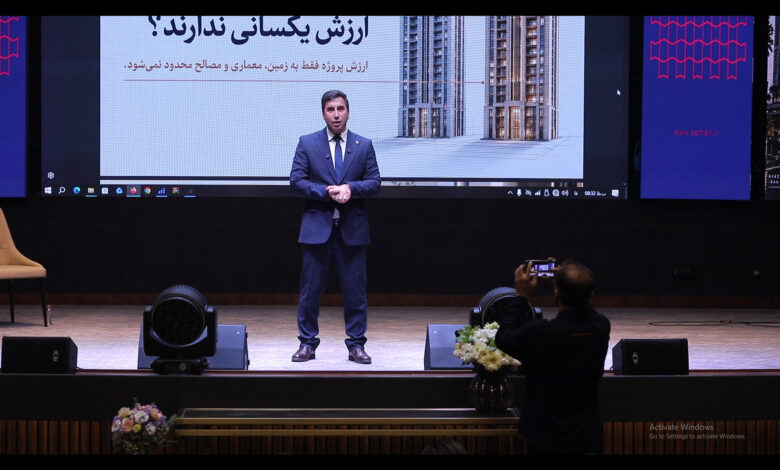
According to SAMA, Reza Bidar, a developer and chairman of the board of Tali Park Construction Group, on the second day of the 24th National Builders, Developers and Designers Conference, used numerical examples from real projects to examine the impact of timing, inflation, procurement scheduling, sales conditions and unit sizes on project profitability. He explained why, in today’s market, focusing solely on reducing construction costs is no longer sufficient.
Bidar opened his presentation with the question of what a developer should build, how to build it, and how to sell it in a highly volatile economic environment. He said that rather than introducing his company’s projects, he wanted to discuss the decision-making logic behind them—a logic that can make the difference between two seemingly similar projects yielding low profits or several-fold returns.
Bidar noted that the classic formula of total sales minus total costs is insufficient for understanding project profit, because a decisive variable is hidden within it: time. The start date, construction duration, timing of material purchases, sales timing, method of receiving payments, and even the order of expenditures can completely alter a project’s economic outcome.
The Effect of One Million Toman on Project Revenue
To illustrate the importance of sales, he gave an example: in a project with approximately 40,000 square meters of usable floor area, an increase of just one million toman per square meter in the selling price can add tens of billions of toman to project revenue. In his view, sometimes efforts to enhance sales value, branding and product experience have a far greater impact than merely pressuring for a few percentage points reduction in construction costs.
Bidar then emphasized that a developer must continuously analyze the market. He said Tali Park Group collects data and experience from various markets through educational activities and communication with builders in different cities. This understanding helps define the product, unit sizes and market entry timing based on actual demand rather than the builder’s personal preference.
How Inflation Erodes Apparent Profit
He then used a real example to show how inflation can wipe out apparent profit margins. According to him, in a specific project, the estimated construction cost for one year and the prevailing sales price indicated a high profit margin. However, when the same project was re-estimated for the following year with rapid cost growth and slower price appreciation, the profit noticeably declined.
Bidar said the more critical issue is that a large portion of construction costs occurs in the final months of the project, when purchases such as cables, elevators, glass, windows and finishing equipment are made during peak inflation. Therefore, if today’s calculations do not account for future purchase timing, the developer may face an unrealistic picture of profit.
He cited pre-purchasing or price-locking of some materials as one of his company’s strategies. According to Bidar, negotiating with suppliers and using staged payment plans can