Calls for green, equity-driven projects and a return to identity-based architecture
Iran’s Urban Regeneration Deputy Warns of Imbalanced Investment in Mazandaran
- Golpayegani: Investment in Mazandaran is imbalanced and lacks traffic, environmental, and social impact assessments.
- Urban Regeneration Deputy: Projects must move toward green and equity-centered initiatives.
- Emphasis on reviving identity-based Iranian architecture and creating livable spaces for future generations.
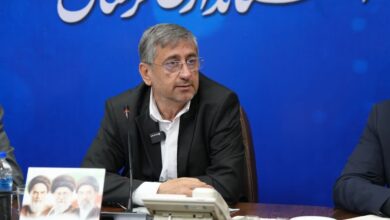
In an in-depth interview with SAMA, Abdolreza Golpayegani, Iran’s Deputy for Urban Regeneration, examined the fundamental challenges of investment in Mazandaran Province, warning against the lack of balance in project distribution and the neglect of essential ancillary plans in urban and regional development processes.
Lack of balance: the main ailment of investment in Mazandaran
At the outset of his remarks, Golpayegani pointed to the current state of investment in Mazandaran and stated: “Unfortunately, in Mazandaran Province, we are witnessing a lack of balance in investment. Tourism projects are concentrated in one specific part of the province, while in another part, we see mass construction of residential buildings without proper planning. This imbalanced dispersion not only fails to contribute to the province’s balanced development but has itself become a source of many structural and environmental anomalies.”
He added: “This approach has led to many projects being implemented without the necessary infrastructure and lacking essential ancillary plans, including traffic impact assessments, environmental impact assessments, and social impact assessments. Neglecting these plans will impose heavy costs on the province and its residents in the long run.”
Investment must not benefit only the investor
The Deputy for Urban Regeneration, emphasizing a participatory and people-centered approach to urban development, noted: “Investment projects should not be designed and implemented in a way that only the investor benefits. The ideal development model is one in which the three sides—investor, region, and people—simultaneously benefit from the project’s outcomes.”
Golpayegani clarified: “Unfortunately, in many cases, we see projects being implemented with a purely economic outlook, without considering the needs of local communities and the region’s capacities. In the long term, this approach not only undermines the project’s sustainability but also leads to public dissatisfaction and social conflicts.”
He added: “We must move toward projects that deliver the greatest benefit to the largest number of people. This means equity-centered investment, fair distribution of benefits, and involving local communities in decision-making and implementation processes.”
The need for balance in the type of investment with a green approach
Referring to the serious limitations of Mazandaran Province in terms of natural resources, Golpayegani stressed the need to create “balance in the type of investment” and said: “Our resources in the province are limited. Agricultural land is limited, energy resources are limited, and environmental capacities are also limited. Therefore, any investment must be made with these limitations in mind and in proportion to existing capacities.”
He further stated, citing communicated policies and upstream directives: “According to announced policies, investments in the building, tourism, and public services sectors must move toward green projects. We can no longer implement a project that cannot manage energy issues, cannot solve the wastewater problem, or is not compatible with the environment.”
The Deputy for Urban Regeneration provided concrete examples in this regard: “For instance, in the building sector, we must move toward using local materials, renewable energy, waste and wastewater management systems, and climate-responsive designs. In the tourism sector, we must move toward sustainable and responsible tourism that not only does not harm nature but also contributes to its preservation and restoration.”
Architecture: an art to respond to human spiritual needs
In another part of the interview, Golpayegani adopted an anthropological approach to the role and function of architecture, stating: “Architecture is not merely a physical structure; it carries deeper meaning and significance. Architecture means designing and building a space that enables responding to human spiritual, psychological, and aspirational needs. Essentially, architecture aligns with human needs and must be able to answer his spiritual and emotional requirements.”
Referring to three key words in Iranian-Islamic culture—‘tranquility,’ ‘dwelling,’ and ‘spouse’—he added: “In the Quran, God has made the night for rest, introduced the spouse as a source of tranquility, and described the home as a space for dwelling and peace. This shows that the living environment, whether at the macro scale of the city, the neighborhood scale, or the residential unit scale, must provide a foundation for tranquility and a life of security and comfort.”
Iranian architecture: a brilliant chain that was overlooked
The Deputy for Urban Regeneration expressed regret over contemporary architecture’s distance from the historical identity and distinctive style of Iranian architecture, stating: “We are among the countries with a brilliant civilizational record and a unique, distinctive style in architecture. From desert windcatchers and central-courtyard houses to magnificent mosques and historic bridges, all reflect the depth of vision and artistic taste of Iranian craftsmen over centuries.”
He continued: “It is a pity that we have not been able to properly continue this brilliant chain of Iranian architecture. Of course, to be fair, valuable and excellent works have been created in recent years by architects and expert colleagues, and people live in these spaces and have created good memories, but we still have a long way to go to reach the position that Iranian architecture holds in the context of its civilization.”
Golpayegani, referring to successful examples of contemporary architecture worldwide, said: “In many developed countries, contemporary architecture has managed to establish a deep connection with its historical and local identity while also meeting modern needs. We too must follow this path, relying on our cultural and historical richness, and restore architecture to its rightful place.”
Urban regeneration: reviving fundamental values for the next generation
At the end of the interview, Golpayegani elaborated on the approach and mission of the Urban Regeneration Deputy’s office, emphasizing: “The basis of our work in the Urban Regeneration Deputy is the principle of reviving and sustaining the fundamental values that have existed in cities and residential spaces. We are obliged to create livable and sustainable spaces for the next generation.”
He added: “Urban regeneration is not merely about physical renovation; it is about reviving identity, improving quality of life, enhancing the sense of place attachment, and creating equal opportunities for all citizens. This approach can serve as a bridge between Iran’s proud architectural past and a future worthy of this land.”
In his concluding remarks, the Deputy for Urban Regeneration highlighted the key role of the media in cultural development and awareness-raising, noting: “Media outlets like SAMA can, by accurately reflecting these concerns and promoting the discourse of identity-based architecture and sustainable investment, pave the way for a positive transformation in the views of officials, designers, investors, and the public toward their cities and living spaces.”