Specialist report from the 26th Tehran International Building Exhibition
The Map Has Changed: SAMA’s Account of the New Construction Market
- Over 40 specialist conversations held with more than 50 construction industry figures
- Financing challenges examined and the need to change investment models highlighted
- Emphasis on industrialised construction and reducing reliance on traditional building methods
- Redefining the role of architecture in project economics and saleability
- Discussion on professional responsibility and transparency in the construction chain
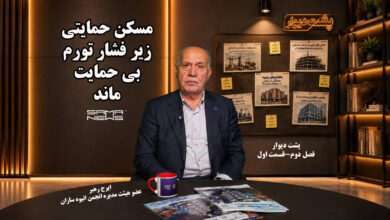
SAMA’s media presence at the 26th Tehran International Building Exhibition concluded with a series of specialist conversations under the title ‘The Map Has Changed’ — a programme held in partnership with the Tehran Province Housing and Building Mass Builders Employers’ Association, designed to re-examine the new market conditions and pose fresh questions about the future of construction in Iran.
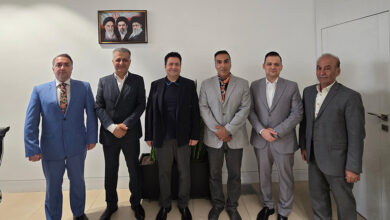
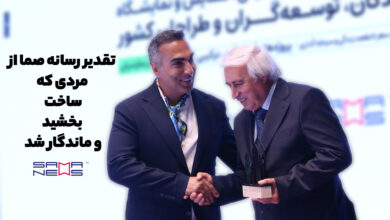
According to SAMA, the programme ran from 17 to 20 August 2026 in Hall 38 of the Tehran International Exhibition Centre. Over four days, the SAMA studio hosted more than 50 builders, developers, architects, manufacturers, managers, experts and officials from the building and urban development sector.
These conversations focused on the new realities of the construction industry, shaped by the recognition that today’s market can no longer be analysed using the equations and rules of just a few years ago. Stagnation, inflation, energy imbalances, rising construction costs, difficulties in securing finance, shifting buyer behaviour, supply-chain upheavals and changing expectations around building quality are among the variables that have made decision-making in this industry more complex than ever before.
It was against this backdrop that ‘The Map Has Changed’ was chosen as the central theme — a title that underscores the need to rethink how building projects are defined, financed, designed, executed and brought to market.
How should we build in this market?
One of the core threads running through the SAMA studio discussions was a simple yet fundamental question: how should we build in this market? At a time when construction costs, purchasing power, sales velocity and investment models have all shifted, merely having access to land and capital is no longer enough to guarantee a project’s success.
The conversations addressed issues such as the type of building product, understanding the target audience, project scale, execution timelines, sales strategy, market research and the necessity of making critical decisions before a project even begins.
Construction in an age of uncertainty: stagnation, energy and inflation
Another segment of the discussions was devoted to what can be described as an age of uncertainty in the construction industry. Persistent inflation, economic volatility, energy constraints, rising raw-material costs and declining purchasing power have made long-term forecasting extremely difficult for many projects.
One of the questions debated was how a builder or developer should manage project risk under such conditions, and whether traditional decision-making models still hold up against the new market realities.
New-generation project financing methods
Financing emerged as one of the most prominent topics raised during the exhibition conversations. The sharp increase in the capital required to start and complete projects, constraints on bank lending and the reduced liquidity of builders have pushed the construction industry to seek new financing tools more urgently than ever before.
Partnership models, investment funds, the capital market, professional pre-sales and other novel capital-raising methods were among the subjects discussed with practitioners and experts in the field. One point repeatedly stressed was that, in today’s environment, the financing model must be considered from the very definition stage of a project and can no longer be treated as a matter to be dealt with midway through construction.
Materials and the building supply chain
Manufacturers and professionals from the building materials and equipment sector also made up a significant portion of the SAMA studio guests. Energy imbalances, raw-material prices, transport, foreign exchange, quality, imports, exports and continuity of product supply were among the topics debated concerning the future of the building supply chain.
These conversations also highlighted the changing role of manufacturers — the idea that the manufacturer of the future is no longer merely a product seller but must become part of the project value chain and a technical partner to the builder, architect and developer.
Architecture, development and the future of urban life
Another focus area of ‘The Map Has Changed’ was the relationship between architecture, development and the market. The question was raised whether a successful project can still be defined solely by floor area, façade, location and price, or whether concepts such as quality of life, the experience of dwelling, public space, identity, flexibility and the needs of a new generation must also enter the equation.
Conversations with architects and developers revealed that the relationship between these two spheres needs to be redefined, and that architecture can play a greater role than before in the economics, branding, saleability and longevity of a project.
Revisiting construction rules and professional responsibility
The issue of professional responsibility and construction regulations was another serious thread in the discussions. The question of who exactly bears responsibility for the final quality of a building remains one of the structural problems of the construction industry.
The builder, the executor, the architect, the supervisor, the municipality, the Engineering Council and other relevant bodies each control a part of the construction chain, but the absence of clearly defined boundaries of responsibility can lead to diminished accountability. The qualified executor, the technical identity document, quality insurance, professional supervision and the need to redefine responsibilities were among the topics examined in this segment.
Building to sell or building to live?
A shift in perspective towards the building product was another central theme. For years, a significant portion of the housing market has been shaped by a ‘build, sell and exit the project’ model. However, changing lifestyles, rising buyer expectations and the growing importance of management and operational quality have raised the question of whether the project of the future should merely be saleable, or whether it must also deliver a genuine experience of living and dwelling.
In this part of the conversations, changing consumer behaviour and the need to move from a purely capital-driven outlook towards a product-oriented and life-oriented approach were examined.
Industrialised construction: a topic back in the spotlight
Industrialised construction was the eighth main theme of ‘The Map Has Changed’ discussions. Speed of execution, reduction of material waste, quality control, labour shortages, cost management and standardisation have made industrialisation more of a necessity than ever before.
Nevertheless, one of the key questions raised was why, despite years of talk about industrialisation, the bulk of construction in the country is still carried out using traditional methods, and where the real path towards industrialisation should begin.
More than 50 conversations: the narratives of ‘The Map Has Changed’ continue
Over four days at the exhibition, the SAMA studio conducted conversations with more than 50 figures from across the spectrum of the construction industry. The diversity of guests — from builders and developers to architects, manufacturers, managers, experts and officials — made it possible to examine the main issues facing the industry from multiple angles.
These conversations do not mark the end of ‘The Map Has Changed’ programme. The collection of interviews, analyses and viewpoints recorded at the exhibition will be gradually published on the SAMA news platform and its social media channels, with each of the eight thematic areas being pursued through standalone content pieces.
Through publishing this collection, SAMA aims to present a multi-faceted picture of the real conditions in the construction market — a picture that does not stop at merely stating the problems but helps create the ground for dialogue about new decisions, models and pathways.
‘The Map Has Changed’: the conversation has only just begun. The construction market has changed, and many of the rules that formed the basis of decision-making just a few years ago now need to be revisited. From the economic model of a project and its financing, to architecture, materials, professional responsibility and industrialisation, every component of the construction chain has been affected by the new conditions.
‘The Map Has Changed’ was an effort to hear about these changes from the people who, every day, make decisions, produce, design and build at the heart of the construction industry. The conversations recorded at the Tehran Building Exhibition will be published in stages by SAMA. The map has changed; the narratives have only just begun.