Province's development capacities under the spotlight
Mazandaran Set to Become Iran’s Laboratory for Sustainable and Green Architecture
- Mazandaran can become Iran's laboratory for sustainable and green architecture
- Emphasis on moving from traditional villa construction to service-oriented settlements
- Use of renewable energy and climatic capacities in design
- Maritime development as a solution to land scarcity and infrastructure
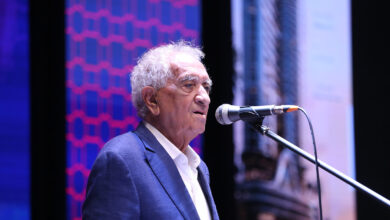
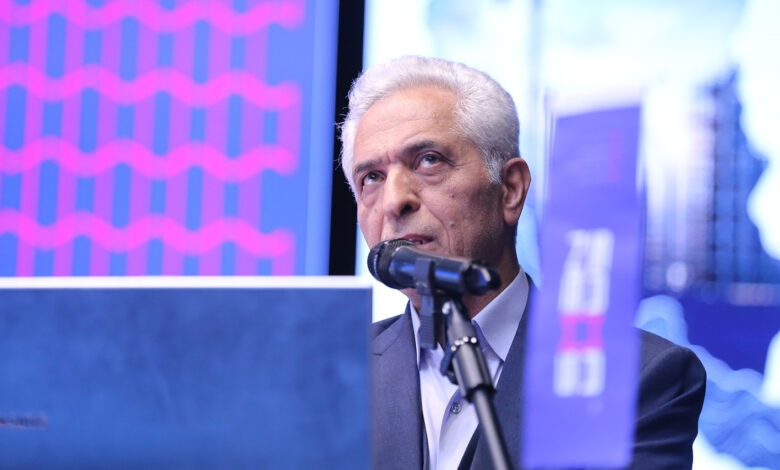
Professor Mahmoud Golabchi, President of Pars University of Art and Architecture, delivered a speech examining Mazandaran’s potential in sustainable development, tourism, vernacular architecture, maritime development, and future technologies, emphasizing the intelligent use of land, renewable energy, service-oriented settlements, and the integration of architecture with nature.
According to SAMA, Golabchi began his address by stressing that Mazandaran, owing to its history, geography, cultural memory, and natural endowments, can become one of the country’s most significant platforms for sustainable development and productive investment. He identified the primary goal as building a “sustainable, prosperous, and green Mazandaran,” stating that this objective must be pursued alongside preserving the region’s identity, boosting national and international tourism, and safeguarding land as a lasting asset.
Golabchi organized his discussion into five areas: sustainable development, tourism development, vernacular architecture, maritime development, and foresight in architecture and technology. He emphasized that Mazandaran is among the few regions in Iran where these five areas can converge within a single geography, potentially making it a model for balanced development across the country.
Green Architecture and Sustainable Development
In the sustainable development segment, he cited forward-looking global examples, including conceptual designs for future cities such as “Paris 2050,” to illustrate the direction of global architectural trends. According to him, what is currently discussed as green and sustainable architecture in major world cities is more readily achievable in Mazandaran due to its climate, humidity, vegetation, and natural capacity.
The president of Pars University of Art and Architecture then turned to vernacular architecture, reminding the audience that Iran has historically held a distinguished position in architecture, urban planning, art, and engineering. He stressed that referencing global examples should not mean forgetting Iran’s architectural heritage, and that contemporary architects must be able to link modern knowledge with the climatic and cultural logic of their homeland.
Golabchi pointed to examples such as Frank Lloyd Wright’s “Fallingwater” and contemporary projects in various countries, noting that the common principle in successful works is attention to context, climate, and nature. In his view, Mazandaran can likewise host projects that not only avoid harming nature but also derive part of their architectural quality from it.
He then addressed the role of environmental and renewable energy, stating that relative humidity, wind, solar energy, and green spaces in Mazandaran can become active design elements. He emphasized that future architecture must reduce energy consumption and utilize climatic capacities to meet part of a building’s needs.
Service-Oriented Settlements and Maritime Development
Golabchi identified a necessary shift in the northern market from traditional villa construction toward service-oriented, managed settlements and residences. He argued that projects offering services, operation, public space, and professional management alongside housing will better meet future needs and can steer investment in the province toward more sustainable models.
He also highlighted the potential for maritime development, citing Kansai Airport and projects built on water bodies in various countries, and said that in some parts of the world, the sea has become part of the solution to land scarcity and infrastructure development. In his view, this topic in northern Iran also requires serious study and long-term planning, and can, alongside coastal protection, lead to the creation of new capacities.
He described Mazandaran as potentially one of the most suitable spaces in the country for implementing innovative architectural and urban planning ideas, saying that concepts such as sustainable architecture, green architecture, vernacular architecture, energy efficiency, green roofs, and modern construction technologies are not merely academic subjects in this province but practical and achievable issues.
Foresight in Architecture and Technology
In the foresight section, Golabchi outlined the global architectural movement toward organic forms, bionic architecture, elevated green spaces, self-sufficient buildings, and humanity’s return to nature. He said that even future skyscrapers are striving to bring the quality of neighborhoods, green space, water, and nature to height, moving away from buildings as mere physical masses.
He also spoke about the growing role of digital technology, artificial intelligence, modeling, and 3D printing in design and construction, emphasizing that traditional methods will gradually give way to digital processes and data-driven decision-making. In his view, these developments can transform the form and logic of construction in the coming decades.
In conclusion, Golabchi said that the ultimate goal of all science, academia, technology, and architecture is to build a better future for humanity. He stressed that Mazandaran has the capacity to become a true laboratory for sustainable architecture, modern tourism, and new technologies along this path, with its achievements serving as a model for other parts of the country.