Sama’s Exclusive Interview with Ali-Asghar Shalbafian
Iran Promotes Mixed-Use Tourism Projects, ۴۰-۶۰ Model to Attract Private Investment
TEHRAN – Iran is pushing mixed-use tourism projects and a so-called 40-60 model as a way to channel private capital into tourism infrastructure, amid high construction costs, limited bank financing and lengthy administrative procedures.
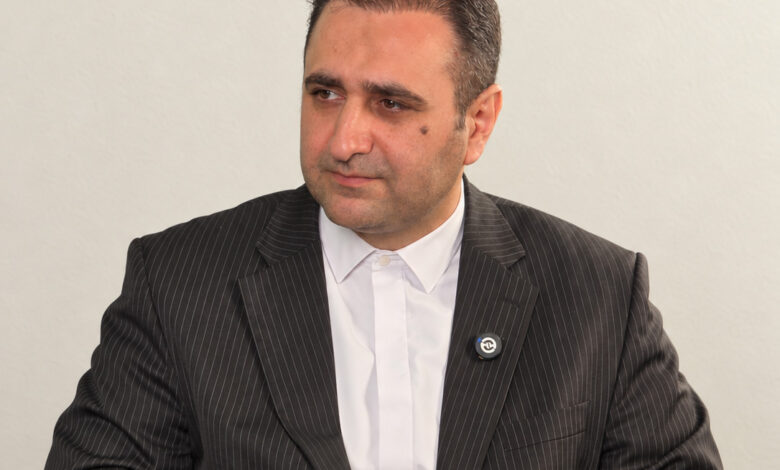
Ali-Asghar Shalbafian, head of the Center for Investment and Economic Affairs at the Ministry of Cultural Heritage, Tourism and Handicrafts, outlined the policy in an interview with Sama Studio. He said the main challenge is making tourism attractive enough for private investors.
“No matter how much we talk about Iran’s natural, historical and cultural capacities, without the necessary infrastructure, those capacities cannot be used in practice,” Shalbafian said. He added that while the government must create incentives and mechanisms, the private sector should play a greater role in building and completing tourism infrastructure.
Three Pillars Under Seventh Development Plan
Shalbafian said the Seventh Development Plan sets out three main pillars, with executive regulations already drafted, approved and communicated or being implemented.
The first is mixed-use tourism projects. The second is exemption from commercial profit tax and customs duties for imports of equipment needed by hotels and tourism projects, subject to approval by the Ministry of Cultural Heritage, Tourism and Handicrafts. The third is creating new structures and using existing but unorganized capacities.
Under the plan, the ministry can issue permits for tourism investment development and facilitation companies. These companies are meant to identify and organize existing experience and capacities, especially from the construction sector, and connect them with hotel management and tourism development.
“Many people who decide to build a hotel or tourism complex come from other industries and do not necessarily have enough hotel experience,” Shalbafian said. Facilitation and development companies can advise on choosing the right investment, implementation and administrative follow-up, shortening and sharpening the investment path.
What Is the 40-60 Model?
Shalbafian said mixed-use tourism projects have three key features.
First, on land with a tourism use, office, commercial or residential uses can be placed alongside tourism use. This applies to tourism land within city and village boundaries and their surrounding zones, not land outside those areas.
Second, the non-tourism part of the project can be sold or pre-sold to finance the tourism part. In a mixed-use project that includes a hotel and residential, office or commercial sections, up to 40 percent of the total useful floor area can be allocated to non-tourism use after legal procedures and necessary approvals. The investor can sell or pre-sell this part and use the proceeds to complete the tourism section.
The 40 percent figure is a ceiling, not an automatic right for every project. The amount must be determined for each project based on its characteristics and after approval by the Ministry of Cultural Heritage, Tourism and Handicrafts and relevant provincial and municipal authorities.
Third, separate title deeds can be issued for permitted residential, office or commercial sections. The land itself remains in tourism use and does not change its nature, while the structures of the non-tourism section can be sold and separately titled under the project’s specific rules.
Shalbafian said about 3,080 tourism investment projects are currently under way across Iran with private capital. Public and bank facilities, despite recent openings, are not enough to finance large-scale projects. The sale and pre-sale of the non-tourism section is a way to finance part of tourism infrastructure from within the project itself.
Existing and Unfinished Projects
The mechanism is not limited to projects defined from the start as mixed-use. Existing large-scale projects that have been stalled for years due to financing needs can also use it, provided their designs can be changed to meet mixed-use requirements and necessary permits are obtained.
Shalbafian noted technical complexities: common areas, parking, elevators, owners’ rights and preventing interference between non-tourism and tourism uses must be clear from the beginning. Some operational problems must be anticipated during architectural design. In exchange for incentives, investors have obligations to ensure the tourism infrastructure is completed and operated. Benefits from the non-tourism section should not be separated from completion of the tourism section.
No Fixed Minimum Land Area
There is no fixed minimum land area for all projects, Shalbafian said, because rules differ by type of tourism facility. The requirements for a hotel vary depending on its grade and number of stars, compared with a tourism complex or other facilities. Feasibility cannot be measured by land area alone and requires case-by-case review.
Risk and Return
Shalbafian said well-studied and well-located tourism projects with distinctive services can be highly profitable. However, macroeconomic variables such as inflation and exchange-rate jumps affect all sectors, including tourism, by reducing purchasing power and increasing construction costs.
One aim of mixed-use development is to partially neutralize inflation within the project. Under the previous model, a fully accommodation-based project did not create reliable revenue before completion. Now, with necessary permits, the investor can pre-sell the non-tourism section. If project costs rise, the sale value of the non-tourism section also changes with the market, enabling financing from within the project. “This mechanism does not eliminate all risks, but it can reduce financing pressure,” he said.
Mazandaran’s Potential
Shalbafian said Mazandaran was chosen for the conference because of strong demand for mixed-use projects and its major capacity for tourism investment. Coastal areas, forest areas and nature tourism each allow different investment models.
In forests, a model must protect natural resources while allowing managed public use of nature tourism capacities. In water resources, reservoirs, non-drinking dams and natural areas around water sources offer significant potential. With cooperation from the Ministry of Energy, tourism use of these capacities has been recognized, and nearly 1,000 water reservoirs could, if requirements are met, provide accommodation and recreation services.
In Mazandaran’s coastal areas, private and personal uses have in some cases taken priority over public tourism use. The number of suitable hotels along the coast is not proportionate to the province’s capacity, and some land that once had tourism use has been allocated to other uses. This has limited public access to the coast and reduced opportunities for tourism infrastructure.
Freeing and reviving some coastal and marine tourism areas and creating marinas are among priorities for coastal provinces, especially Mazandaran, he said.
Investor Path and Bureaucracy
An investor with land should first apply to the provincial directorate of the Ministry of Cultural Heritage, Tourism and Handicrafts for preliminary approval. Larger investments are referred to the ministry’s headquarters. The type of facility, location, project capacity and compliance with rules determine the review path.
“We do not deny the existence of administrative bureaucracy,” Shalbafian said. “This bureaucracy is one of the most serious reasons for project delays, investor withdrawal or investment never taking shape.” The ministry must continuously reform its processes, and the starting point is accepting the problem.
Regular meetings with investors are held at headquarters and provincial levels to review obstacles case by case. Direct dialogue and continuous follow-up are emphasized. Part of the bureaucracy is rooted in administrative culture, and overcoming it requires direct, sustained follow-up as well as process reform.
Mazandaran Summit
The Mazandaran summit allows direct interaction between officials, investors and developers, Shalbafian said. The ministry will present some unnamed investment packages in its pavilion, connecting ready investment opportunities with builders, developers and investors attending the event.
Construction Sector and Foreign Investment
Shalbafian said one goal is to convert construction-sector capital in northern Iran into tourism development. Iran’s construction industry has accumulated valuable experience, and the best way to transfer it is for construction actors to enter tourism projects directly.
“When construction industry actors enter this field, they transfer not only capital but also design, construction, project management, cost control and implementation experience,” he said. The government has tried to provide incentives through mixed-use projects, facilitated equipment imports and development and facilitation structures.
For foreign investors, profitability and comparison with projects in other countries are common concerns. Foreign investors ask why a hotel cannot include residences, home offices or commercial space, or why lower floors of a tower cannot be commercial and other floors a hotel. Mixed-use projects were designed to answer part of this need.
Administrative barriers are a major concern. Iran’s Organization for Investment, Economic and Technical Assistance can support foreign investment and, in some cases, speed up case processing. Another important capacity is unnamed investment packages, developed under the Law on Financing Production and Infrastructure. Previously, permits had to be issued in a specific person’s name from the start. Now, initial inquiries, reviews and preliminary permits for an investment opportunity can be prepared before the investor is identified. After selection, the investor’s name is inserted into the permit and implementation process.
This saves investors from starting at zero and spending long periods obtaining clearances from multiple agencies. The number of unnamed investment packages has become a performance indicator for provinces, and introducing them can be a practical way to overcome part of the administrative bureaucracy, Shalbafian said.