Land criteria, sales rules, and municipal fees explained
Executive Details of Mixed-Use Tourism Projects Unveiled

- Mixed-use projects apply to lands with tourism zoning and to lands whose use is legally changed to tourism.
- The share of non-tourism uses is up to 40 percent of floor area within city and village boundaries and up to 20 percent in city buffer zones.
- Parcel deeds can be issued for residential, commercial, and office units in the non-tourism portion.
- The regulation was drafted under the Seventh National Development Plan with the Ministry of Cultural Heritage and the Ministry of Roads and Urban Development.
- Municipal fee discounts depend on each city council's decision, and a national campaign to reduce tourism facility fees has been launched.
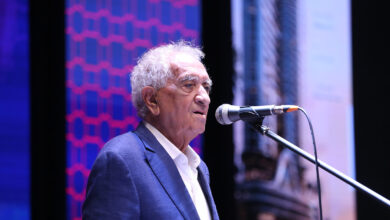
According to SAMA, Ahmad Tajari, Director General of Investment, Infrastructure and Sample Tourism Zones at Iran’s Ministry of Cultural Heritage, Tourism and Handicrafts, outlined the executive details of mixed-use tourism projects during a specialized panel on the second day of the 24th National Builders, Developers and Designers Conference. In response to audience questions, he addressed land types, land-use changes, urban and rural boundaries, the share of non-tourism uses, parcel deeds, municipal fees, and projects currently under construction.
At the outset, Tajari noted that in recent years a series of incentives have been designed to reduce the total cost of tourism projects and boost their economic appeal, with mixed-use projects being one of the most important tools of this policy. He stressed that the primary goal of this model is to develop tourism infrastructure and provide a more practical financing route for investors.
Eligible Lands and Implementation Scope
Tajari first explained which lands are eligible, stating that this capacity applies to plots already zoned for tourism. He added that lands initially holding non-tourism designations can also enter the model if their land-use change to tourism is carried out through legal channels, including urban planning processes and the Article Five Commission.
He clarified that the regulation is not limited to city limits and can also be implemented in city buffer zones and rural areas, subject to applicable rules. Regarding the share of non-tourism uses, Tajari explained that within city and village boundaries, up to 40 percent of the floor area, and within city buffer zones, up to 20 percent, may be allocated to permitted non-tourism uses under the regulation.
To remove ambiguity about how these percentages are calculated, he said that spaces such as swimming pools, gyms, recreational services, and other components tied to tourism functions count as part of the tourism segment, while what is defined as residential, office, or commercial use falls within the 40 or 20 percent share.
Ownership, Sales, and Legal Basis
Tajari identified ownership structure and sales as a key concern for investors, noting that the regulation provides for the issuance of parcel deeds for residential, commercial, and office units in the non-tourism portion, giving buyers clear legal title to their units. He added that pre-sale and sale arrangements are also provided for under the rules, but the rationale behind this privilege is to finance the completion of tourism infrastructure.
Regarding the legal basis of the regulation, the Ministry’s investment director explained that it was drafted within the framework of the Seventh National Development Plan, with participation from the Ministry of Cultural Heritage and the Ministry of Roads and Urban Development, and after passing through the government’s approval process, it was communicated to relevant bodies for implementation. He emphasized that this policy is not a purely sectoral decision and that the views of multiple institutions were sought during the approval process.
Audience Questions on Lands, Fees, and Ongoing Projects
During the Q&A session, one attendee asked about forest lands and old natural-resource allocations. Tajari said that in past years, permits have been issued for certain lands and plans, and projects holding valid initial approvals must continue their legal path based on the status of their files; however, restrictions on forest lands and natural resources are subject to their own specific regulations and cannot be overridden.
Another question raised the issue of municipal fee discounts. Tajari explained that the discount rate in each city depends on the decision of that city’s council and the municipality. According to him, the ministry, in cooperation with the Ministry of Interior, has launched a national campaign to reduce fees for tourism facilities, and various cities have adopted different discount percentages. He stressed that the tourism fee discount is more clearly defined in cities participating in the campaign, but the method of calculating fees for the non-tourism portion of a mixed-use project must be determined within the framework of that city’s regulations.
Regarding projects under construction, Tajari said that converting an existing project into a tourism facility can be considered if it complies with the rules and follows legal procedures, but each project must be assessed based on its own file. He added that land-use changes, density, occupancy levels, and other urban planning parameters require the relevant legal process, and a blanket yes-or-no answer cannot be given for all projects.
He further noted that in tourism projects, due to the more public nature of services and the need to build infrastructure, issuing authorities can in some cases be more cooperative on density and occupancy levels, but this too remains subject to urban planning rules and approvals.
Tajari concluded by emphasizing that the drafting of the mixed-use project regulation involved various groups, from university professors and city managers to mass builders and tourism investors, and that completing the executive guidelines must continue with the same participatory approach to prevent the model from deviating during the construction and operation phases.