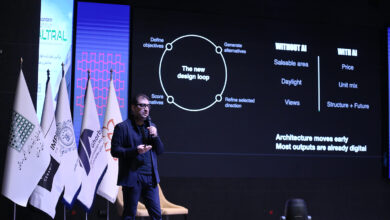
Calls for a Rethink of Urban Planning Rules
Construction in Tehran Faces Regulatory and Financial Constraints
- Financing projects has become harder, and urban regulations have complicated the construction process
- Plots of 200 to 300 square meters do not allow for diverse design or reduced energy consumption
- The quality of domestic materials such as cement, chillers, and multi-layered glass is improving
- In Turkey, housing is built within a year, but in Iran it takes years
- The government should provide land to builders and ease the path for housing construction
According to SAMA, Peyman Eskandari, a building industry developer, has criticized the growing difficulties of construction in Tehran, pointing to the complexity of urban regulations, prolonged permit processes, and restrictions on architectural designs. He stressed the need for cooperation between the government and the municipality to accelerate housing construction, reduce costs, and improve quality of life.
Constraints Have Made Construction in Tehran Difficult
Peyman Eskandari, referring to the changing conditions of construction in recent years, said: “Financing projects has become significantly harder, and at the same time, urban rules and regulations—from the municipality and the engineering system to the fire department—have made the construction process more complicated.”
Criticizing the increasing limitations on building designs, he said: “Today, a builder cannot construct as they wish, and many projects have become uniform and similar.” According to him, plots of 200 to 300 square meters offer little opportunity for diverse design, creating open spaces, better natural light, or reducing energy consumption.
Urban Services and Architectural Standards: Developers’ Demands
This building industry developer, pointing to restrictions on providing urban services within projects, added: “There are regulatory barriers to building swimming pools, sports areas, or shared amenities, and the municipality should provide urban services appropriate to the projects.”
He also criticized the traditional outlook of some consultants and city managers toward architecture, calling for a transformation aligned with Iranian architecture—a shift that, he said, could make life more comfortable for residents through the interplay of light, space, volume, and height.
Improving the Quality of Domestic Materials and Equipment
Eskandari, noting the progress of Iran’s construction industries, said: “Year by year, the quality of materials and equipment improves, and many products—including cement, chillers, acoustic and thermal windows, multi-layered glass, and domestically produced tiles—are being upgraded.”
He also reminded that in past years, shortages of some materials like cement and chillers delayed the construction process, forcing builders to wait years to secure supplies.
Market Changes and the Need for Design Flexibility
This building industry developer, referring to the time gap between design and project execution, said: “When an architect presents a design, the market and needs may have changed several years later; therefore, there must be a possibility to revise the design according to new conditions.”
He added: “Today, windows, glass, and building materials are far more advanced than before, and construction must keep pace with these developments.”
Housing Is a People’s Need; Construction Must Accelerate
Eskandari, emphasizing that housing is a real need for the people, said: “Housing construction must be accelerated with the help of government agencies.” Referring to Turkey’s experience, he said: “In Turkey, housing is built and delivered within a year, but in Iran, due to inflation, project delays, permits, and hold-ups, housing construction takes years and is not economically viable.”
He believes that if regulations are reformed, professional builders will perform better, and with broader design, more appropriate heights, more open space, and higher quality, a better life can be provided for residents.
The Municipality’s Role in Reducing Costs and Traffic
This building industry developer, pointing to the municipality’s role in reducing construction costs, said: “If projects are built near metro stations and fewer parking spaces are planned, costs will decrease—provided that the builder can free up the land and secure the funds for it.”
He also referred to the situation in the north of the country and the widespread interest in construction there, saying: “Many investors have entered the north, and projects like Lotus, with an area of one million square meters, are under construction.”
The Government Must Understand the Needs of Builders and the People
In conclusion, Eskandari, stressing the need for cooperation between the government and the private sector, said: “Why should projects be concentrated only in the north? Why not carry out construction in all parts of the country?” He suggested that instead of focusing on specific projects, the government should provide land to builders and, by converting assets into trains, money, and infrastructure, pave the way for housing construction.
He said: “It is the right of an Iranian family to own a home, and we hope that with the help of the government and the private sector, this goal will be achieved.”