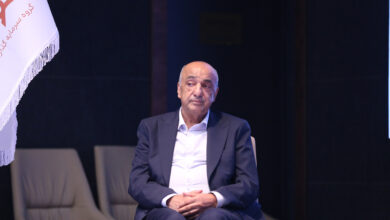
Veteran architect Fereydoun Azari calls for enforceable regulations, higher occupancy rates, public coastal access, and integrated transport planning
Mixed-Use Projects Must Be Feasible for Both Investors and Operators, Says Ekbatan Architect

- Emphasis on drafting realistic enforceable regulations for mixed-use projects from the investor and operator perspective
- Proposal to use the serviced-apartment model to increase occupancy rates and economic viability
- Need for public access to coastal strips and converting part of them into public and tourism spaces
- Call for an integrated view of transport infrastructure and defining complementary uses for self-sufficiency
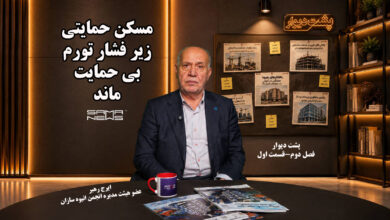
According to SAMA, Fereydoun Azari, a veteran architect and the designer of Ekbatan Town, has stressed the need for realistic enforceable regulations for mixed-use projects, higher occupancy rates, public access to coastal strips, and an integrated approach to transport infrastructure. He made the remarks while recalling the history of the serviced-apartment concept in Iran.
Azari began his speech by highlighting the gap between idea and execution, saying that five decades of professional practice have shown him that the main issue today is not repeating past experiences, but rather asking what practical solutions can be offered under current conditions.
He referred to an earlier experience in which he was asked for his opinion on how to make residential projects economically viable. His proposal at the time was the “serviced apartment” model: a furnished unit with tourism use that can be bought and sold, and which is rented out by the operating entity when the owner is absent.
He noted that this model has been implemented in many countries in the region and around the world. Its advantage, he said, is that it provides financing and economic justification for the developer while giving the owner an income-generating asset that can also be used personally. In his view, the logic behind today’s mixed-use projects can build on these experiences.
Mixed-Use Regulations from the Investor and Operator Perspective
Azari emphasized that a mixed-use project should not be reduced to a slogan or merely a legal percentage of uses. Regulations must be examined from the perspective of the investor, the buyer, and the operator. It must be clear how units are sold, what services they receive, how they are operated, and what model can increase the occupancy rate.
He said one of the major issues is the low occupancy rate of many accommodation projects. If a mixed-use model cannot generate real consumption and operation, simply adding residential use will not solve the problem. In his view, smaller, furnished, and managed units can address part of this issue.
Public Access to Coastal Strips and Transport Infrastructure
The veteran architect then turned to coastal strips, saying that one of the major shortcomings of Iran’s coastal cities is weak public access to the sea. Future development, he argued, should ensure that part of the coastal strip is turned into public, service, and tourism spaces so that people can also use the sea and the beach, rather than the first line being reserved solely for private, underused plots.
Azari also stressed the connection between building projects and transport infrastructure. He said the Tehran–North Freeway, coastal corridors, and traffic nodes must be viewed as part of a single development network. He believes that part of the infrastructure can be moved toward self-sufficient or partnership models by defining complementary, service, and commercial uses.
In conclusion, he expressed his readiness to contribute intellectually to the development of executable models for mixed-use projects, saying that architectural and urban development experience should be used to turn regulations into real, usable plans.