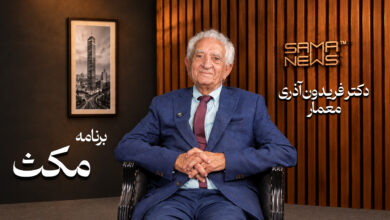
Arslan Faraji outlines its applications
Modular Construction: From Site Facilities to Tourism Accommodation
- Modular construction can reduce implementation time and allow structures to be relocated or reused.
- Construction-site offices and facilities can be dismantled after a project and used on another.
- Villa communities and tourism markets can be developed in phases in response to demand.
- Box hotels were presented as a repeatable, expandable option for short stays on high-traffic routes.
Arslan Faraji, an entrepreneur and innovator in the construction industry, outlined a range of modular construction applications, from construction-site facilities and tourism markets to villa developments, nature-based accommodation and box hotels. He emphasized the method’s speed of implementation and its potential for phased expansion. According to SAMA, Faraji said his presentation drew on examples such as emergency hospitals and modular accommodation at major events, which have shown that industrialized construction can sharply reduce building time and allow structures to be relocated or reused.
Faraji explained that modular construction components are manufactured according to engineering drawings and fitted with precise connections. Depending on project requirements, they can be transported to the site as complete units or as separate components. He cited reduced time-consuming work on site, better quality control and rapid assembly among the method’s advantages.
Construction-Site Facilities and Tourism Markets
Faraji identified construction-site facilities as an important application of modular construction. In his view, such facilities are no longer merely temporary spaces for project teams; they can also contribute to a project’s identity and brand. Management, engineering, administrative, welfare and accommodation facilities can be built as modules and dismantled after a project ends for use on another project.
He also presented traditional and tourism markets as another application of the system. These spaces can host local products, handicrafts and food, as well as cafés and restaurants, and can be expanded in stages if demand grows. Faraji described this flexibility as a significant advantage for projects that do not want to commit all their investment to construction at the outset.
Phased Development of Villa Communities and Accommodation
The construction-industry professional said a modular villa community can begin with a limited number of villas, with subsequent phases developed as sales progress or demand increases. This allows the land to become a marketable product sooner and enables investors to phase the project’s cash flow.
According to Faraji, small-scale accommodation in natural settings is another use for the system. By combining different numbers of units, developers can design suites, cabins and single-storey or duplex villas, adapting them to humid, hot, cold or mountainous climates.
Referring to the country’s water reservoirs, lakes and natural areas, Faraji said that staying beside water and amid nature can offer tourists a different experience. In such projects, accommodation, food services and water-based recreation can be brought together in a modular complex, turning underused potential into a business that can be expanded.
Box Hotels on High-Traffic Routes
Faraji concluded by citing box hotels as a model for the country’s high-traffic routes: short-stay, standardized and economical accommodation for travelers who need a few hours of safe and comfortable rest. According to Faraji, the model’s advantages include repeatability, gradual expansion and the ability to adjust capacity to demand on each route.