A reflection on the builder's duty
An Architect’s Responsibility Does Not End at Project Handover; the Real Question Is ‘What Is Worthy of This Land’
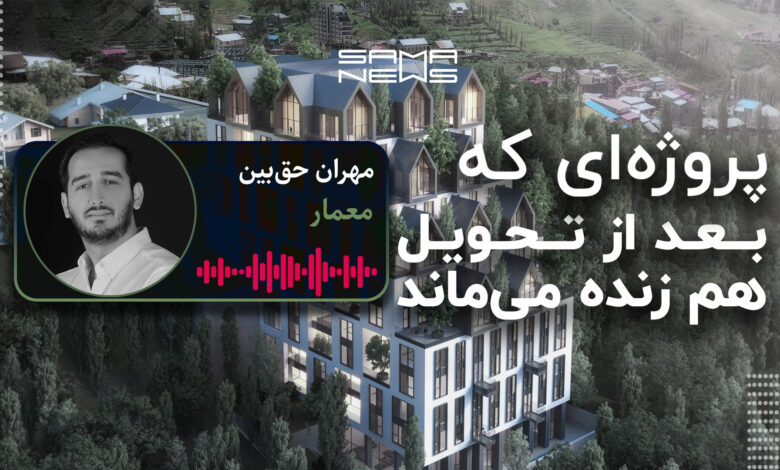
- A builder's responsibility does not end on the day a project is handed over
- The more important question than 'what can we build' is 'what is worthy of being built'
- The relationship between people and the northern climate has shifted from agriculture to large complexes
- Architecture, construction and operation are three parts of a single vision
Mehran Haghbin, an architect, has pointed to the gradual shift in the relationship between people and the climate of northern Iran, stressing that a builder’s responsibility does not end on the day a project is handed over. He argues that the more important question than “what can we build” is “what is worthy of being built on this land.”
A changing relationship with the northern climate
Referring to the northern slopes of the Alborz mountains, the forest and the sea, architect Mehran Haghbin noted that this climate has sustained human life for centuries. Yet this land has not only hosted its own inhabitants; the Caspian shores have for years welcomed people from across Iran—individuals who come to this region to experience part of their lives alongside the forest and the sea, in a different climate.
He believes our relationship with this environment has gradually changed: from agriculture and forest to land and ownership, from house to villa, and from villa to compound. According to him, density, population, services, communal spaces, infrastructure and programmes that were once defined within the urban structure are now taking shape in the form of larger complexes.
The key question: what is worthy of being built?
The architect stressed that the question is not only what we are able to build; perhaps the more important question is what deserves to be built on this land. In his view, the forest, water, soil and landscape are our heritage, and even what we build today—if it is to endure—will one day become part of this land’s legacy.
The builder’s responsibility after handover day
Mehran Haghbin, addressing the role of the builder, said that the builder’s responsibility cannot end on the day the project is delivered. He believes the landscape must continue, the facilities must keep working, communal spaces must preserve their quality better than on the first day, and services must remain responsive and aligned with changing human needs. In other words, the project must be planned for life after construction as well.
Architecture, construction and operation: three parts of a single vision
He went on to say that architecture, construction and operation are no longer three separate stages, but three parts of a single approach to organising life. According to him, in the end we are not merely adding a building to this land; we are introducing a crafted work into a relationship that, long before us, defined the bond between people and this climate.
Emphasis on responsibility toward future generations
In concluding his remarks, Mehran Haghbin stressed that perhaps our true responsibility is to ensure that when we add something to this land, we do not diminish its generosity. He believes that what we take from this land must be able to endure, alongside what we add to it, for tomorrow and for those who come after us.